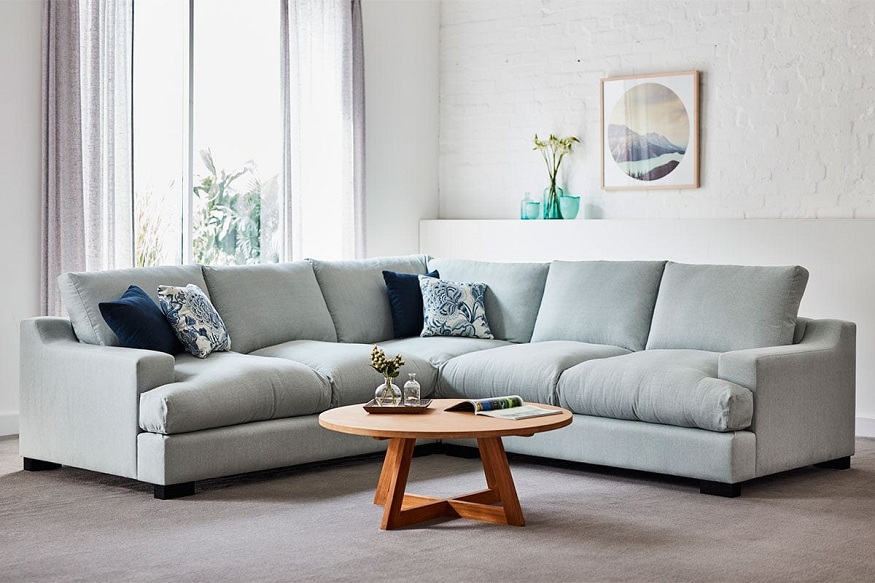

Choosing an L-shaped chaise lounge is the easy part. Getting the size right for your living room is where many people run into trouble. A lounge that looks perfect in a large showroom can feel oversized, cramped or awkward once it sits in a smaller home. Careful measuring before you order saves time, money and frustration.
This guide walks through the key steps to measure your space accurately so your new lounge looks intentional rather than squeezed in.
Start with How You Use the Room
Before you pick up a tape measure, think about what actually happens in the room. Is it a TV space, a reading corner, or a mixed family area that needs to cope with kids, pets and visitors? The primary use of the lounges Australia will influence where you place the lounge, how many seats you need and how much floor you can realistically cover.
Make a quick sketch of the room with doors, windows, power points and any features you must keep accessible. If you already own other pieces, such as a media unit or bookcase, mark those as well. Many people find it useful to browse Australian retailers while they sketch, to see typical dimensions and configurations.
Map the Footprint on The Floor
Next, mark out the approximate shape of the lounge on the floor with painter’s tape or sheets of newspaper. This simple step gives an immediate sense of scale. Leave at least 80–90 centimetres for walkways so people can move around without bumping knees or squeezing past.
Read More: How to Measure Your Space for an L-Shaped Chaise Lounge Without Getting It Wrong
Check door swings, balcony access and the route to other rooms. A layout that blocks a sliding door or forces everyone to edge sideways around the corner of the lounge will quickly become annoying.
The Key Measurements You Need
When you feel confident about where the lounge will sit, start measuring. The essential numbers include:
- Wall length (or length across the open space) where the long side will run
- Maximum length you can accept for the chaise section
- Overall depth from the back of the lounge to the front edge of the seat
- Distance from floor to top of the back cushions
- Height of arms, especially if they need to sit under a window sill
Write these down clearly and keep them handy when you compare models. For many households, a chaise lounge sofa with a slightly shallower depth or lower back can make the difference between a comfortable fit and a bulky presence that dominates the room.
Understanding Left-Hand and Right-Hand Chaise
Orientation confuses many buyers. The simplest way to describe it is to stand facing the lounge. If the chaise extends out on your left, it is a left-hand chaise. If it extends on your right, it is a right-hand chaise.
Read More: The Benefits of Buying Ink Toner in Bulk: A Smart Choice for Your Business
When you plan, think about where you want the open side to face. Most people prefer that side to face the TV, a view or the most common entrance to the room so the layout feels inviting rather than closed off. This choice applies to most l shape lounges, whether they sit against a wall or float in the middle of the space.
Allowing Space for Coffee Tables and Side Pieces
A lounge never sits in isolation. Leave enough room in front for a coffee table and legroom. A useful guide is 40–50 centimetres between the front of the lounge and the table. This distance lets people reach items easily without feeling cramped.
If you plan on a double chaise lounge or extra-deep model, check that there is still space for occasional chairs or side tables where needed. It is better to allow a bit more breathing room than to pack in too many pieces that compete for the same floor area.
Checking Doors, Lifts and Stairwells
A lounge that fits the room still needs to reach the room. Measure the width and height of front doors, internal doors, lifts and stairwells. Note any tight corners on the delivery route as well. Many lounges have removable legs or modular sections, but there are still limits on what can safely pass through narrow openings.
This step is particularly important for larger homes and for people ordering custom made lounges Sydney wide, as made-to-order pieces are not always simple to return or modify once built. When in doubt, ask the supplier for packed dimensions and discuss delivery access before you finalise your order.
Using Proportions to Keep the Room Balanced
Proportion matters as much as raw size. A very small lounge in a long, open room can look lost, while an oversized piece can overwhelm a compact apartment. As a rough guide, many designers suggest that the main seating area occupies around two-thirds of the wall or zone it sits within.
Think about seat depth as well. Deep seats suit taller people and relaxed lounging, while shallower seats may work better for older family members or anyone who prefers to sit more upright. These details affect comfort just as strongly as overall length.
Considering Future Flexibility
Rooms change over time. When you measure, consider whether you might rearrange the space later. A symmetrical design or a model with reversible cushions can give more flexibility if you decide to swap the orientation or move the lounge to another room.
Modular pieces that link together can also adapt more readily than a single fixed unit. Many buyers choose this route when they want the general feel of l shape lounges but also need the option to shift sections for entertaining or cleaning.
Bringing Your Measurements to The Showroom
Once you have clear measurements, take them along when you visit a showroom or browse online. Compare your numbers with the dimensions listed for each lounge, not just the photos. It can help to carry a simple drawing of your room so staff can suggest options that fit both size and layout.
Careful planning turns the process from guesswork into a straightforward matching exercise. With accurate measurements and a clear sense of how you use your space, you can select a lounge that suits your home, your lifestyle and your comfort preferences, rather than adjusting your living room around a poorly chosen piece.